Everyone Thought This Ad Was AI
Aidan Tan
QULIT Staff Writer
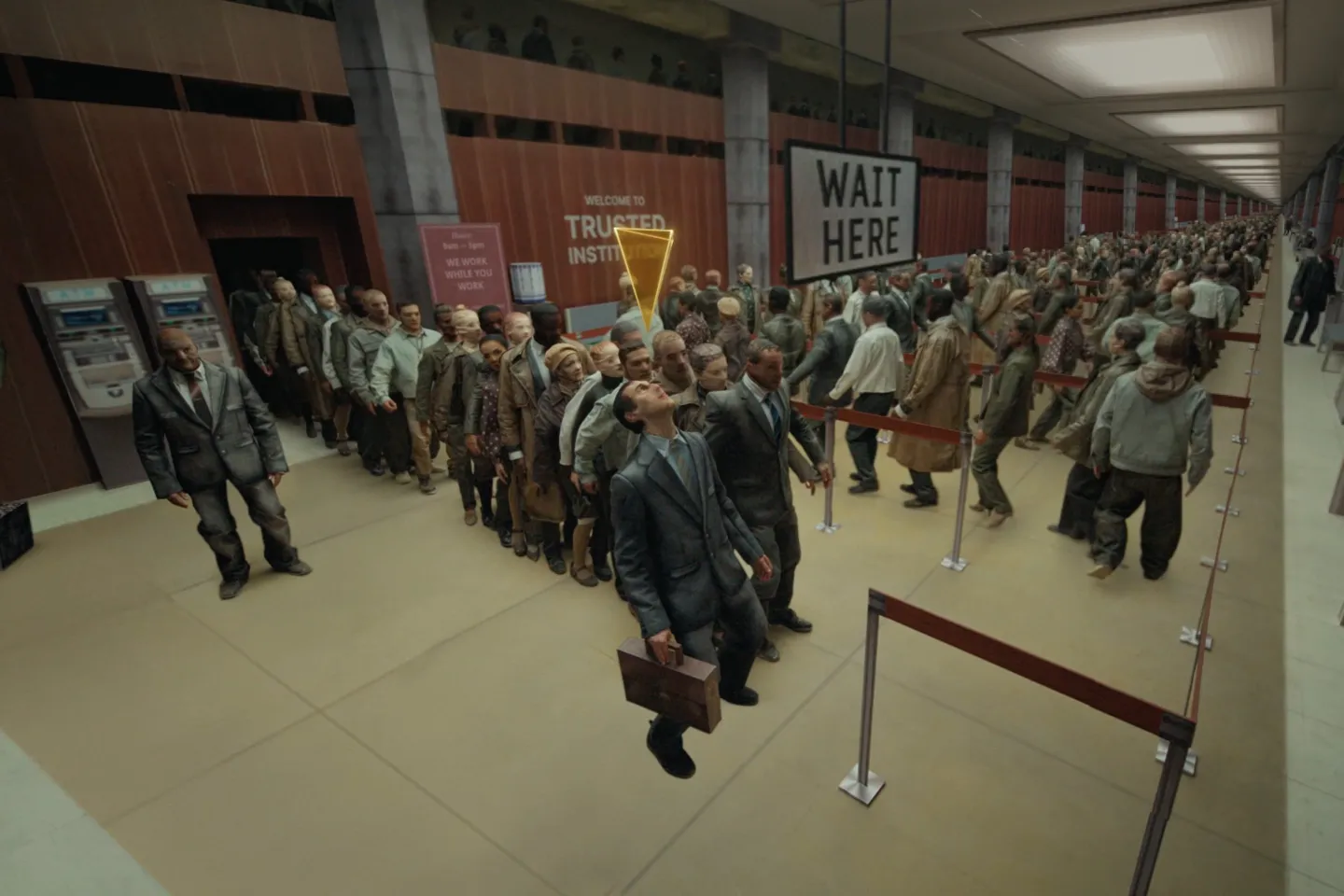
At first glance, Coinbase's latest campaign looks exactly like something generated by AI. The characters move like video game NPCs. The environments feel strangely artificial. Even the lighting has that uncanny, synthetic quality we've come to associate with AI-generated videos. But that's precisely what makes the campaign so clever.
Directed by Oscar Hudson and creative studio Isle of Any, almost everything audiences assumed was computer-generated was actually built by hand. The production relied on practical sets, carefully choreographed performances, forced perspective, custom costumes, and meticulously controlled lighting to recreate the unsettling feeling of a video game world. Rather than leaning on AI, the team used traditional filmmaking techniques to imitate the aesthetic people now instinctively associate with it.
That creative decision perfectly reinforces the campaign's message. The film follows NPC-like characters trapped in repetitive routines before discovering a way to break free, echoing Coinbase's broader theme of escaping outdated financial systems. Making the world feel artificial without relying on artificial intelligence creates an extra layer of storytelling. The medium doesn't just support the message, it becomes part of it.
There's also a broader creative lesson hiding beneath the execution. As AI-generated content becomes easier to produce, audiences are becoming increasingly familiar with its visual language. Instead of competing with AI, Coinbase borrowed that language, then revealed the craftsmanship behind it. In a landscape where everyone expects technology to do the work, human execution became the surprise.
For marketers, that's an important shift. New technology isn't always the most memorable part of a campaign. Sometimes, using human creativity to imitate technology creates an even stronger story.
The takeaway? In the AI era, craftsmanship can be your biggest creative advantage.
Sources: LBBOnline, It's Nice That